This is the start of more videos. In addition to weekly written reviews, I’ll be posting video reviews, too. This was just a montage “year in review” video. Enjoy.
Whiplash: Review


Whiplash
5 Stars
Starring: Miles Teller, J.K. Simmons, Paul Reiser and Melissa Benoist; Written & Directed by Damien Chazelle
J.K Simmons’ powerfully intense performance proves that the parts of a film can overcome their sum whole.
Writer/director Damien Chazelle remakes his own 2013 short as a full length feature, and it’s easy to see that while it’s not his first time behind the lens, it’s certainly tackling a large-scale project, even if it is familiar territory. Every decision he makes with the camera is predictable, from the long one shots, to the rapid cuts, to the shakey-cam, distant angles. It comes across as a comprehensive study in film-making 101. I’m not asking for him to change the game, but it would be nice if he took the training wheels off.
Where Chazelle excels, however, was in his exceptional screenplay. He builds this beautiful Yin-Yang relationship between Teller’s Andrew and Simmons’ Fletcher. Both are incredibly passionate about what they do, and are looking to achieve the same goal, but their approaches counter-act each other which leads to a climactic explosion of drum playing that leads to the exquisitely executed final scene that showcases not only Simmons & Teller’s abilities as actors, but Chazelle’s ability as a filmmaker. It makes the viewer wonder where Chazelle of the last 10 minutes was during the previous 90.
Teller is a difficult actor to pin down. He launched his career with art house flair Rabbit Hole, then ran through the young actor motions of party flick, teen romance, YA future-world. He never presented as the breakout star, but he was definitely entertaining on another level than his fellow cast-mates, and showed a lot of promise. Whiplash is where that promise comes to fruition. He puts a lot of heart into Andrew. You see the drive and determination in his eyes. He masterfully masks the pain of forsaking a personal relationship for his ambitions. He’s soulful at all the right moments.
But Simmons. J.K. Simmons is in another world, on another planet with his brutal and intense performance as Terrance Fletcher, Andrew’s instructor. Simmons plays Fletcher with bi-polar swings from loud, big and angry to soft, reserved and almost friendly. He exudes an air of superiority without coming across as annoyingly arrogant. He truly believes in what he’s doing and that it’s the right way to do it. There’s no hint of smugness, just bull-headed passion. If I had to handicap the Oscars, he’s the runaway leader for Supporting Actor.
Whiplash firmly plants itself as one of the must-see films of the year, despite the aesthetic flaws. A strong script and brilliantly realized performances carry it to one of the top films of the year.
How I Was Disappointed by How I Met Your Mother

 What made How I Met Your Mother an interesting entrant into the sitcom field is that it had a binding narrative arc that ran the course of its 9 seasons. there were payoffs for long game joke set-ups, references to previous episodes that weren’t casual lip-service, and a rich mythos set up by creator/writers Carter Bays and Craig Thomas that’s usually reserved for serial dramas.
And we all went along for the ride. We were there for every inside joke. Every hook up. Every break up. Every make up. Every suit up. Fans of the show stuck dutifully by its side through 9 seasons in hopes of meeting the mother and getting a satisfying end to the longest story ever told.
Which we did…. kinda. Let me back up a little.
The primary conceit of the 9th season was that it all took place during one weekend, the wedding weekend of Barney and Robin. The narrow focus of the show’s final season raised some eyebrows when it was announced, but I commented that Bays and Thomas knew what they were doing, and we should trust that they’ll not lead us astray. And I was digging the final season. It was an odd route to go, but I trusted them to land the show in a satisfactory way.
But holy shit did they blow that the hell up.
Because of the final season’s structure, we were taken on a journey through Barney & Robin’s relationship, and how they handled their cold feet and dealt with their feelings and we came to accept that they truly did love each other, and we also had to deal with both Ted and Robin letting each other go after both being such a huge part of each other’s lives.
We were also given very little face time with the mother. We don’t even find out her name is Tracy until the final episode. Looking back, it does nicely set-up the final reveal that the mother has been long dead while Ted’s telling his kids the story, and that Robin and Barney have since divorced. Since his relationship with Robin was a big focus of the whole story, it became his way of asking permission to date again. To date Robin.
My initial reaction to the finale was just two words: “Fucking Bullshit.” And I stand by that. During the first 8 seasons, we’re on this journey with Ted as he tries to find “the one.” That’s the story we’re emotionally involved with. We came close with Victoria and Stella and even Robin herself. They dropped subtle, and not-so-subtle, clues throughout the show’s run as to who she is and when they’ll meet. That’s what we were on board with.
In the final season, we’re emotionally involved with Barney and Robin, and all the little interactions with Tracy. How she came to meet everybody before she met Ted, then the pay off of them meeting in the final episode. We were now connected with Tracy. We loved her. We were emotionally invested in these stories and we wanted to see them played out.
By killing off Tracy and sending Ted right back to Robin, they completely invalidate everything we went through by hitting the reset button. Killing off the mother before we really get a chance to see them together… I mean REALLY see them together, means that our attachment to her was pointless. Ending the Barney & Robin relationship as casually as they did, just shrugging it off with “Oh, P.S. divorce” means the 4 season attachment we’ve had with them has been pointless. All the corners Barney turned to be with Robin… pointless.
Ultimately, my problem with the finale isn’t Tracy’s death, Robin & Barney’s divorce, and Ted & Robin getting back together. That ending makes quite a bit of sense. My anger, my disappointment, my dissatisfaction stems from how gloriously mishandled it all was.
Had the arc of the 9th season been condensed into the first few episodes of the season, starting off with the wedding right away, maybe meeting Tracy by episode 3 or 4, that would have been perfect. We could have lost all that Daphne road-trip bullshit. The point of the Blauman episode still could have been made. And then they could have spent the remaining 20 episodes on cultivating the relationship with Tracy. See them date and fall in love and go through all the things they go through. That way we as an audience can form that bond with Tracy that Ted does. They could have also spent more time on the Barney & Robin split, so that could have packed a more emotional punch for us as the audience.
But as it stands… it feels too hollow. We spent so much time on Barney & Robin’s wedding weekend, and then everything else was just rushed through and skimmed over. The important stuff was rushed through and skimmed over.
And that’s where they failed. Not in the story they told, but in how they told it. I’ll still love How I Met Your Mother… but that finale was just terrible. Again, not for what happened, but how they told us what happened.
And this is all coming from a guy who liked the Lost finale.
Fast Times at Ridgemont High

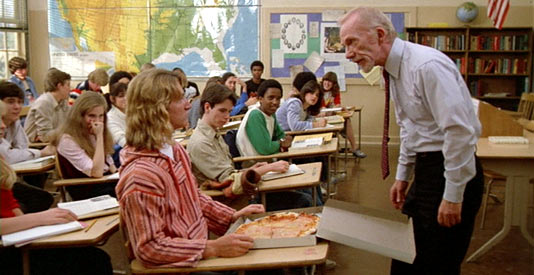
Cameron Crowe and Amy Heckerling joined forces in the early 80s to bring forth one of the most earnest looks at teen life ever put to screen in Fast Times at Ridgemont High, based on Crowe’s book of the same name. Hughes gave us high school through rose-tinted glasses, and throughout the 90s and into the new millennium, we are, with few exceptions, get over-exaggerated idealistic characterizations, tinting those glasses even rosier. Jocks with hearts of gold, geeks getting the girl, plain Jane taking down the popular cliques. Crazy sex-pacts, raging parties and perfect proms.
But not Fast Times. Ultimately it isn’t really about anything. No unifying narrative goal ties the film together. Everybody doesn’t meet in the end for a big hug. We get the opportunity to follow a group of people for a whole year at high school as they deal with douchebag friends, teen pregnancies, overbearing teachers, shitty jobs and everything else the teen years decide to throw at us.
It was daring in its approach to teenage sex, by presenting it and accepting it as a given. It explored the consequences of those actions, but never demonized the actions, which makes it outstanding in its genre. No film geared towards the contemporary youth broached the topic of abortion with such sincerity. There was no redemption for Damone, the guy who skipped out on his responsibilities to Stacey Hamilton after he got her pregnant, and was ultimately a scumbag to his only friend Mark.
As a 22-year-old, Cameron Crowe went undercover as a high school student to write his story. He knew he’d never get an honest answer by just asking questions, so he lived and existed among them, listened to their conversations, went to their get-togethers. And that’s how we got some of the more interesting characters put together that weave a rich tapestry of high school experiences. And if it weren’t for the talented young cast that included Sean Penn, Judge Reinhold, Phoebe Cates, Brian Backer, Jennifer Jason Leigh, with early appearances from Anthony Edwards, Forest Whitaker, Nicolas Cage and Eric Stoltz, the would not have endured through the years.
The John Hughes flicks are great, but if you want a great 80s teen flick, the best of the era… you’ve found it in Fast Times At Ridgemont High.
Happy Breakfast Club Day

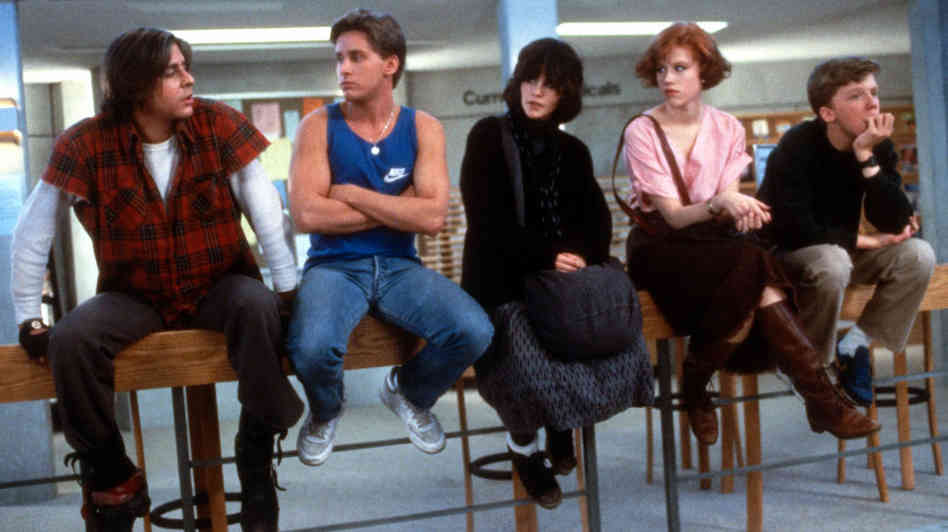
A few years back, I created a few movie centric holidays. I’m a man of no religion, but a huge appreciation for the cinematic arts, so I needed a few high holy days to give me cause for celebration. Back to the Future week happens the week of November 12th, the date of the Enchantment Under the Sea dance. Die Hard Day happens Dec. 24th-25th. Rex Manning Day on May 6th, Dazed & Confused Day on May 28th… a few others. The main conceit of them is offer some personal reflection time, and to relax. Enjoy some music, some good food, the company of friends. You can read about them all in this post from a few years ago.
But today is March 24th. According to opening title cards, today is the day The Breakfast Club spent a whole day in detention, 30 long years ago (thanks to A.V. Club for posting a screen grab). In its genre, the teen flick, it’s certainly one of the best. Not the best, however, American Graffiti, Dazed & Confused and Fast Times at Ridgemont High are certainly superior films. But for almost 30 years, The Breakfast Club has landed with teen audiences in a way few films have. It’s helped many teens navigate the rough seas of high school.
The Breakfast Club takes 5 high school personality archetypes, the geek, the burnout, the jock, the prep and the outcast weirdo, throws them in a giant, library sized blender, and asks them to connect. It’s a completely clichéd narrative device and probably shouldn’t, by any rights, have the iconic status it has. But a masterful script from 80s teen flick guru John Hughes only uses the clichés as a mechanism to not make us identify with one character, but with all of the characters.
Over the course of the film, all of what we assume we know about the characters are slowly scraped away and picked apart till we grow to have a better understanding of who they are, and why they are who they are. Andy Clark isn’t just some dumb meat head jock. Johnny Bender isn’t just a disinterested burnout. Claire Standish isn’t just an above it all priss. They’re all going through a struggle. They’re all fighting a battle. And that’s what we, as the audience, identified with. We’ve got a struggle we’re trying to get through at that age. Knowing that everyone does too makes it that much easier to take.
I love that the film explores more realistic outcomes of their day together. It asks the question, “We’re friends right here, right now… but what about Monday?” And we get a beautifully honest answer: Probably not. Brian and Allison might hang out. But everyone’s going to go their separate ways. They kind of blew that up by pairing everyone, except Brian, off in the closing moments, but we still get the sense that that was fleeting romance. And while deep down we know that things will probably go back to status quo once the bell rings on Monday morning, we also know that Alison, Andy, Brian, Claire and John all experienced some personal growth, and that they are different, better people because of that shared experience. That gives us, the viewer, the hope that we will emerge on the other side of our struggles as different, better people.
So while the aforementioned films from Amy Heckerling, George Lucas and Richard Linklater are decidedly better films, the reason Hughes’ Breakfast Club has created such a lasting impression is that it connects the characters to each other, and to the audience, in a way that we as audiences need at the time we see it (preferably in high school… the film kind of has a shelf-life of relevancy).
Breakfast Club Day, like the movie, is about acknowledging the differences we have with the people we interact with on a daily basis, but recognizing how similar we all actually are, and how we can use both the similarities and differences to better understand one another.
Happy Breakfast Club Day, everybody!
300: Rise of an Empire

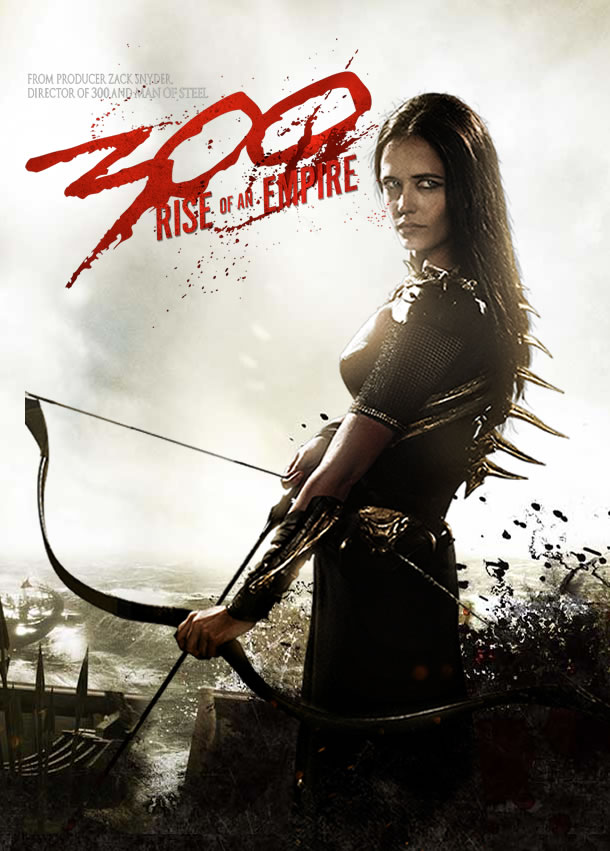
300: Rise of an Empire
1 star
Starring Eva Green, Sullivan Stapleton, Lena Heady; Directed by Noam Murro; Written by Zack Snyder and Kurt Johnstad
I liked the first 300. I liked the visual style, I liked the “campfire tale” aspect of the storytelling, the violent action was entertaining. But I was always wary of a sequel. It didn’t really warrant one, and director Zack Snyder’s unique sense of visualization doesn’t lend itself to duplication. Do I really care what else may have been going on at the same time, what other Greek armies were doing as the Persians were attacking? Turns out no.
There’s a lot of steely glares between Themistocles (Stapleton) and Artemisia (Green), between Themistocles and Queen Gorgo (Heady), between… Themistocles and Random Athenian Soldier #3. And these are in place of exciting action sequences. What action sequences and fight scenes there are, are too quick to really get us into it, even at the trademarked “Slowed Down/Sped Up” pace.
Director Noam Murro’s only cinematic credit was indie comedy Smart People from 2008, and he didn’t handle the transition to big budget action spectacle too well. It felt like someone trying to be Zack Snyder, than trying to do his own thing with an existing property. Granted Snyder’s stock has significantly risen now that he has Superman under his belt, so he wouldn’t be available to come back to helm this new entry into the 300 franchise.
That just compounded the fact that it felt forced. The graphic novel this is supposed to be based upon isn’t even out yet, as Frank Miller is still working on his followup to 300, Xerxes. I’m having a tough time finding a rational reason this film was produced, other than as a money grab, obviously.
The only aspect that kept my interest was my fascination with Eva Green. She’s a great actress and can usually turn a tolerable performance from a sub-par script, which she kinda does. But with so much working against her, it’s hard to get behind her.
I can’t think of any reason to watch this flick, maybe if you’re bored and there’s nothing else on TV at the time, but I left the theatre feeling like my time and money had been wasted.
2014 Oscar Live Blog-o-Thon!

As The Empty Theatre Podcast comes to a close tonight with our live streaming commentary of the Oscar telecast, I re-launch the blog, which has been tragically neglected. One movie will get reviewed per day. Whether I’m seeing it for the first time or it’s an old favourite. That’ll push me to write more, and watch more movies. That will all start tomorrow, and I’ll review the 8 of 9 Best Picture nominees I’ve seen.

Tonight is the traditional Blog-o-thon! You can listen to our live stream commentary here (myself, my Empty Theatre co-host Cherrine and Special Guest Oscar Commentator Caitlin).
And I’ll have my running commentary here, possibly different jokes that I didn’t say over the air. And I’ll update you with winners and random goings on. Join me in less than an hour!
18:45- Still the Red Carpet… Bunch of dresses and tuxes. Love me some Cate Blanchett.
18:51– Jennifer Lawrence fell on the red carpet… getting it out of the way early. Damn she’s gorgeous.
19:28- TIME TO START!
19:41– That’s my first correct guess. Go Jordan Catallano!
20:01 – I’m now 2 for 3. I missed Costume Design (went with American Hustle), but I got Make-Up & Hair!
20:16 – 3 for 5! Best Animated Shot went to Mr. Hublot (I chose Get A Horse). Best Animated Feature went to, no surprise, Frozen.
20:21– And now Gravity wins its first award of the night with Best Visual Effects. I’m 4 for 6. I need 11 more correct guesses to beat my all time best of 14 for 24.
20:32 – I am now 6 for 8. Did good in the short categories, with Live Action Short going to Helium and Documentary Short going to Lady in Number 6.
20:38– I originally chose 20 Feet From Stardom, but once I found out what The Act of Killing was about, I changed it. I should have stuck with my gut instinct. I’m 6 for 9.
20:49 – And Best Foreign Language Film goes to Italy, The Great Beauty! I’m 6 for 10, as I went with Denmark’s The Hunt.
21:08 – Gravity takes home both Sound Mixing and Sound Editing. I’m at 8 for 12. I had a feeling it would take the tech awards. Good job!
21:15– Congratulations to Lupita Nyong’o! A much deserved win for Best Supporting Actress! 9 for 13.
21:27– And Gravity keeps on sweeping the tech awards with a win for Best Cinematography! 10 for 14.
21:32 – I stupidly went with NOT Gravity for best Film Editing. I chose 12 Years a Slave. Now 10 for 15. I’ve matched last year’s picks.
21:44 – Huzzah for The Great Gatsby for winning production design! Very beautiful and flashy design, great job. 11 for 16.
22:15 – Crap. Went with Philomena for Best Original Score instead of Gravity, but I got “Let it Go” from Frozen on Original Song. 12 for 18.
22:27 – Well, I got Best Adapted Screenplay and Best Original Screenplay! Good for Spike Jonze! Her totally deserved it. As did 12 Years a Slave. I’m 14 for 20, which matches my best ever. One more correct pick, and I set a new personal best.
22:35 – YES! I knew it! Any one other than Alfonso Caurón getting this award would have been a complete crime. 15 for 21! A new personal best!
22:51– And the hits keep on coming! I totally got Cate Blanchett for Best Actress, and she was fantastic in Blue Jasmine. Do see it if you haven’t. But it was a misstep for Best Actor. I was sure DiCaprio was gonna get it. Good for McConaughey. I’m happy for him. But god damn what does DiCaprio have to do?! I’m at 16 for 23
22:57– FUCK YES! 12 Years A Slave! Best Picture! That’s 17 for 24. A 71% success rate. And 12 Years A Slave totally deserved it. Good for all involved. Great damn film. Loved it. Great show.
The Wolverine

 The Wolverine

3 stars
Starring Hugh Jackman, Tao Okamoto, Rila Fukushima and Will Yun Lee
Directed by James Mangold
The most fascinating aspect of Logan/Wolverine is how alone in the world he is. At this point, he’s pushing 130 years old, he’s been put through the ringer, mentally and physically. And no X-Men film to date fully realized that part of his character until now. It’s a solid entry into the cinematic canon, and a bold risk that pays off by not even utilizing the other X-Men (save for Jean Grey, who appears only in his dreams)(shut up, that’s not a spoiler, it’s brought up in the trailer).
James Mangold’s work up until now hasn’t been impressive. His films aren’t really bad, but they never really stand out, and he’s a jack of all genres. But one thread that’s weaved through all his films is the character study. From drug addiction and psychosis in Girl, Interrupted to the bizarre psychological thriller Identity, the opposing forces in his remake of 3:10 to Yuma, and of course dealing with rock stardom in Walk the Line. However ultimately mediocre the films end up being, the characters never fail to draw you into their world for that briefest of time. And that’s what he achieves with one of the comic book world’s most tortured, storied and favoured characters. While the film overall is only slightly better than most, and definitely not the best adaptation of the year, its franchise or its publisher, it does achieve what most fail to do, and that’s examine the humanity of the super-human.
Hugh Jackman has, over the past 13 years, been able to fully explore the character in a way that allows him reach down into the heart, the core, of Logan. It helps that he’s grown as an actor as well, having been one of the high points of last year’s Les Miserables that earned him a well deserved Oscar nod. He carries the weight of over a century of hard living so well that you’re rooting for the smallest of wins. It’s a testament to Jackman’s craft that he’s been able to bring the character so far over the past decade and a half, from the cold, stand-offish Wolverine wandering the halls beneath Charles Xavier’s School for Gifted Youngsters, to the weary, beaten Logan scrambling for something to hold on to.
The largely international cast (mostly Japanese, but Jackman’s an Aussie and there’s a Russian thrown in for good measure), bring an interesting flare to the film. Jackman’s been immersed in American cinema for some time now, but the two Japanese female leads were making their feature film debuts, while Svetlana Khodchenkova (guess where she’s from) is known for her Russian work, and the male Japanese leads have dabbled state side, but their popular in their home country. So seeing all these sensibilities and experiences come together gives it a very unique feeling for such a large budget, franchise tent-pole film. There are times when it feels like a smaller film than it really is.
But then the stock 3rd act shows up where our hero has to face a big bad and we’re reminded that it’s a comic book movie, and most of that good will that was built up over the preceding 90-ish minutes gets run over by exactly what we’ve come to expect. Thanks mostly to X-Men for kick-starting the decade-plus long comic book movie craze.
It’s a good movie, it really is, there’s a lot to like about it. But just when you think we’re being treated to something different, something more, something better… we’re handed exactly what we should have expected all along. And it’s just utterly disappointing.
Fruitvale Station

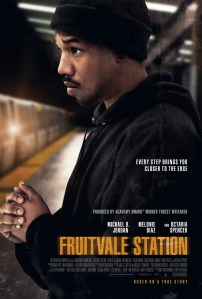 Fruitvale Station
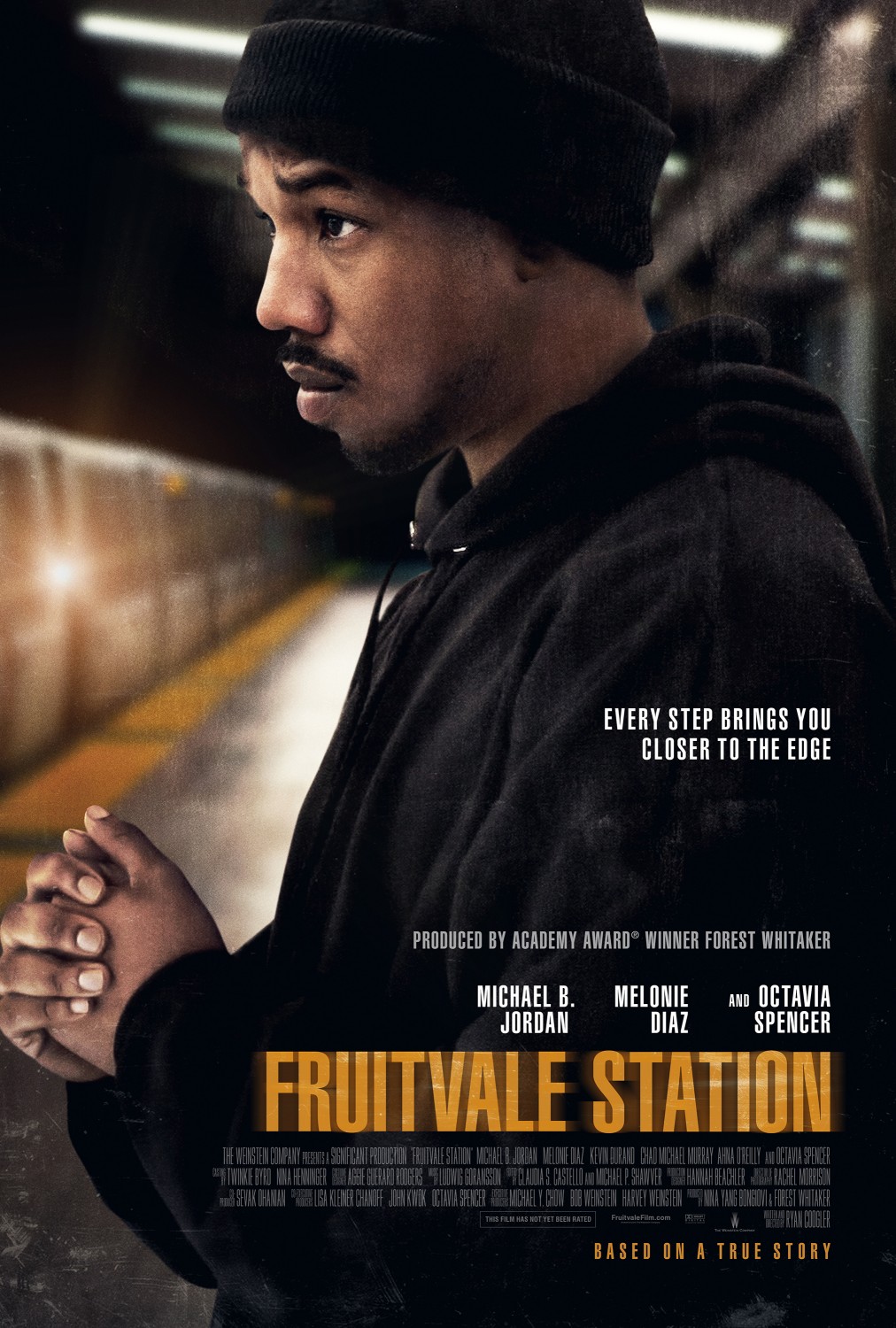
5 stars
Starring Michael B. Jordan, Melonie Diaz, Octavia Spencer and Kevin Durand
Written & Directed by Ryan Coogler
If you’ve seen the trailer for Fruitvale Station, you’ve been severely mislead and under-sold. With a hint of sleight of hand, the trailer promises a gritty, intense drama of a tragic incident, but what we’re given is so much better, in the form of a truly engaging character exploration. What the trailer highlights is really only a small portion of the film.
What Ryan Coogler attempted and succeeded at doing was to paint a portrait of the human being that was Oscar Grant on what would be his final day (that’s not really a spoiler, this was a major national news story, it caused riots in San Francisco and Oakland). We have what we know, there was this kid, ex-con, shot and killed by a police officer, who was later found guilty of involuntary manslaughter. But now we get the amazing story of who he was. Not that it’s particularly inspirational, he’s an ex-con. But he’s working on getting his life back on track for his daughter and that’s the side we don’t see in the media circus.
And Oscar is brought to life brilliantly by Michael B. Jordan. Jordan. Jordan’s been making a solid name for himself for the past 10-12 years, with recurring roles on The Wire, Friday Night Lights, Parenthood and in last year’s exquisite yet under-seen, Chronicle. And this cements him as one of the top emerging talents. He digs deep to the emotional core of Oscar, bringing out his love for his daughter, his reverence for his mom and grandmother, his pure affection for his girlfriend. So rather than just seeing this kid go through the day up until he dies, we’ve got this broken down character who is now trying to put himself back together into the man he knows he should be. Jordan just nails it and even though you know what’s coming in the end, it doesn’t change how you feel about it.
Jordan’s performance was bolstered by a phenomenal supporting cast including Academy Award winner Octavia Spencer (2011 Best Supporting Actress, The Help) as Oscar’s loving mother, and Melonie Diaz as his girlfriend. Spencer brings a level head we’ve come to expect from her dramatic work. She evokes the mindset of a mother whose love for her wayward son has taken a toll, but she still stands by him, despite his shortcomings, and her final scenes are simply heartbreaking. Diaz strikes a similar chord in the put upon girlfriend role, and really helps bring out the humanity of both her and Jordan’s character. You’re with her because, like you, you’ve grown attached to Oscar despite his faults, and she’s in him what we’ve found out about him, that he wants to and can do better.
This will definitely be one to watch come awards season, I’ll predict Film, Screenplay, Actor and Supporting Actress for at least Spencer, if not for Diaz as well.
The Purge

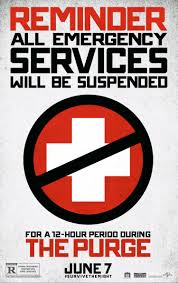
The Purge
2 stars
Starring Ethan Hawke and Lena Headey
Written and Directed by James DeMonaco
When trying to create some sort of social or political commentary through art, be it canvas, the written word, song or cinema, it’s important to make sure that, by completion, you’ve actually said something. It ultimately doesn’t matter how well you tell your story, because once you cross into “this is a metaphor for something” territory, if there isn’t a metaphor, your story is hollow.
Such is the problem with James DeMonaco’s lofty goal film The Purge. He posits the ideal that crime, unemployment, poverty, all the bad stuff, would be reduced to almost zero, if we allowed all crime to be legal for a 12 hour period. It’s a premise that doesn’t make sense on paper, but is just weird enough that you’re intrigued enough to allow the line of questioning, on the condition that it goes somewhere, or says something, interesting. But it doesn’t. There’s no logical explanation as to why this works, aside from the false notion that all human beings are evil at heart, and bottling it up makes the world a terrible place, ergo, let people kill, maim, destroy with no repercussion, and all problems solved. There’s no big philosophical or psychological reveal that really challenges you to think.
While watching the film, and on the drive home afterwards, I was reminded of two films, both in the same, or a similar, genre. Both exquisitely saying what I think The Purge was trying say. The first being Wes Craven’s 1972 thriller classic The Last House on the Left (which was superbly remade in 2009). We’re given two groups of people: the vile gang of murderers and rapists, and the good clean-cut family. And it’s the good clean-cut family that goes on a murderous rampage throughout the film, getting rid of the “bad guys.” Everybody is capable of bad, of evil. We’re presented with traditional hero/villain archetypes, and while we root for the hero, they’re doing sadistic, villainous acts, and it becomes hard to root for them.
The second film was the 2002 British zombie flick 28 Days Later… (one of my all time favourite films) from Danny Boyle. It, too, blurred the line between hero and monster, when Jim goes on his rampage through the mansion, methodically taking out the soldiers. He was running on pure rage, despite not being infected with rage.
That’s the lesson it appears DeMonaco was trying to teach. That we’re all a little evil, and it’s good to vent that. But throughout the movie, the heroes did good things, the villains did bad things, and no lessons were learned by anyone. On or off-screen.
So I have to ask? What were you trying to say, and why didn’t you say it?
It wasn’t a total loss. Taken in as just a straight home-invasion thriller, it’s effective, you’re engaged throughout. Ethan Hawke and Lena Headey anchor a cast of otherwise unknowns, and do so capably. But with a broached subject matter that never gets fleshed out, it feels ultimately hollow.
You can skip this in theatres… probably on Netflix or Redbox as well. Maybe in a few years you’re going to be up late one night, and catch it at 2 am on TNT or USA, and with nothing better to watch than reruns of The Office you’ve already seen 200 times, you’ll say “Meh… Brodie said this would happen, so I might as well.”
 The Empty Theatre
You must be logged in to post a comment.